Updated
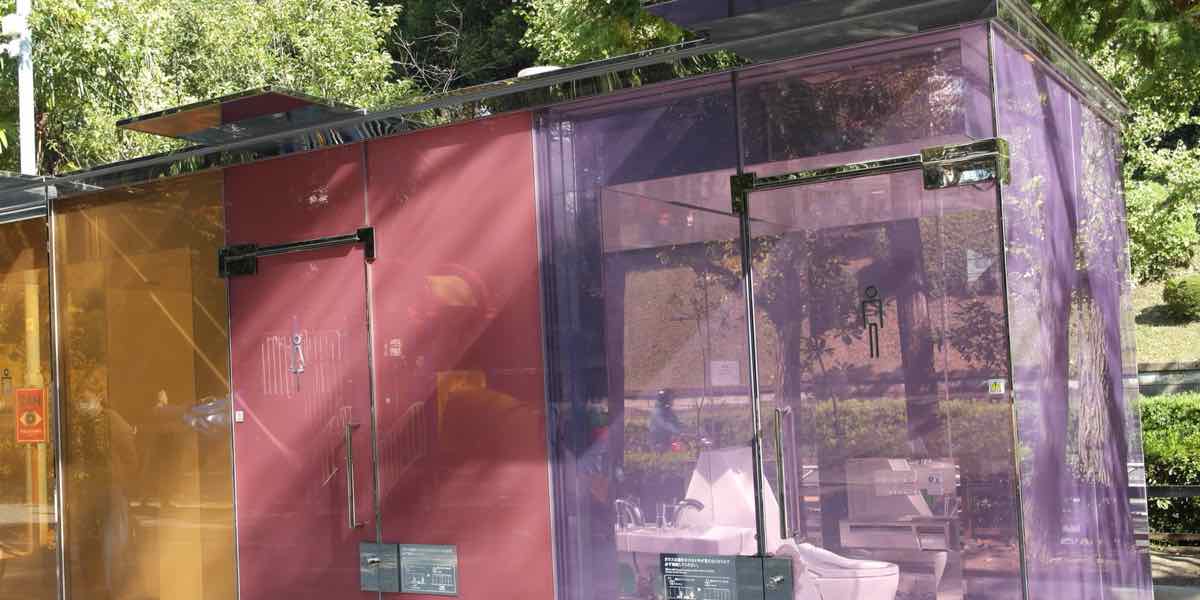
Photo: Shigeru Ban's toilet at Yoyogi Fukamachi Mini Park by Mr.Asylum, CC BY-SA 4.0, cropped.

Where else would you plan a sightseeing walk around public toilets? In Shibuya, 17 of them were rebuilt by some of the world's best-known architects and designers, including Tadao Ando, Kengo Kuma, Shigeru Ban and Toyo Ito. Together they're called The Tokyo Toilet. Since the film Perfect Days, they've become a small pilgrimage for travellers.
🚻 What Is The Tokyo Toilet?
Public toilets have a reputation for being dark, dirty and a little scary, even in Japan. The Tokyo Toilet set out to change that. The idea came from Koji Yanai of Fast Retailing (Uniqlo's parent company). The project was funded by The Nippon Foundation and carried out together with Shibuya City. Its aim was to make public toilets places people are happy to use, and to bring more life back to the parks and streets around them.
Each toilet was given to a different creator, so no two look alike. Design was only half the plan, though. The project also puts a lot of effort into cleaning, and professional toilet inspectors check the facilities regularly.
🎬 The Perfect Days Connection
The project also led to a film. Wim Wenders' Perfect Days (2023) follows Hirayama, played by Kōji Yakusho, a man who cleans The Tokyo Toilet's buildings, one quiet day at a time. Yakusho won Best Actor at the 2023 Cannes Film Festival, and the film was nominated for Best International Feature at the Academy Awards. Many visitors now come looking for the toilets they saw on screen.
🗺️ All 17 Toilets, by Neighbourhood
The toilets are spread across Shibuya ward, but they fall into four rough areas. Seeing one area at a time is the easiest way to visit. The map links open Google Maps.
Ebisu & Hiroo
- Ebisu Station, West Exit · Kashiwa
Sato
A clean white box made of aluminium louvres, right outside the station. 1-5-8 Ebisu-Minami · Map ↗ - Ebisu Park · Masamichi Katayama /
Wonderwall
A playful maze of 15 concrete walls. 1-19-1 Ebisu-Nishi · Map ↗ - Ebisu East Park · Fumihiko Maki
Built around a central courtyard, and nicknamed the “Squid Toilet”. 1-2-16 Ebisu · Map ↗ - Higashi Sanchome · Nao Tamura
Inspired by origata, the traditional Japanese art of ceremonial wrapping. 3-27-1 Higashi · Map ↗ - Hiroo East Park · Tomohito Ushiro
A light display that can show billions of patterns, one for every person on Earth. 4-2-27 Hiroo · Map ↗
Harajuku, Sendagaya & Shoto
- Jingu-Dori Park · Tadao Ando
A round pavilion wrapped in vertical metal louvres. 6-22-8 Jingumae · Map ↗ - Jingumae · NIGO
Looks like a little house, with a red pitched roof and blue-framed windows. 1-3-14 Jingumae · Map ↗ - Urasando · Marc Newson
Inspired by historic Japanese temples and tea rooms. 4-28-1 Sendagaya · Map ↗ - Nabeshima Shoto Park · Kengo Kuma
“A Walk in the Woods”: a cluster of small cedar-clad huts among the trees. 2-10-7 Shoto · Map ↗
Yoyogi, Tomigaya & Nishihara
- Yoyogi Fukamachi Mini Park · Shigeru
Ban
The famous coloured-glass toilet (pictured above). Its walls are designed to be see-through when empty and turn opaque when you lock the door. 1-54-1 Tomigaya · Map ↗ - Haru-no-Ogawa Community Park · Shigeru
Ban
Ban's second glass toilet, in blues and greens that match the surrounding trees. 5-68-1 Yoyogi · Map ↗ - Yoyogi-Hachiman · Toyo Ito
Mushroom-like forms inspired by the forest around the nearby shrine. 5-1-2 Yoyogi · Map ↗ - Nishisando · Sou Fujimoto
Designed to look like an oversized sink. 3-27-1 Yoyogi · Map ↗ - Nishihara Itchome Park · Takenosuke
Sakakura
Glows like a lantern after dark. 1-29-1 Nishihara · Map ↗
Hatagaya & Sasazuka
- Nanago Dori Park · Kazoo Sato
Hands-free: voice control for the door, flush and ambient sounds. 2-53-5 Hatagaya · Map ↗ - Hatagaya · Miles Pennington / UTokyo DLX Design
Lab
A toilet that doubles as a flexible community space. 3-37-8 Hatagaya · Map ↗ - Sasazuka Greenway · Junko
Kobayashi
Built from cylinders of weathering steel. 1-29 Sasazuka · Map ↗
For photos, opening dates and more details on each design, see the official site, tokyotoilet.jp.
🚶 Tips for Visiting
- Pick one area. The toilets in each neighbourhood above are close enough to walk between, but crossing from Ebisu to Hatagaya takes a train ride. The Ebisu and Yoyogi groups are the easiest to cover in an afternoon.
- Remember they're real toilets. Locals use them every day. Don't block the door for photos, wait until they're empty, and never photograph anyone going in or out.
- Lock the door in Shigeru Ban's glass toilets. The walls are supposed to turn opaque when you lock it. In 2022, users reported that the glass sometimes reacted slowly, especially in cold weather, so check before you get comfortable.
- Talk to the toilet at Nanago Dori Park. Its door, flush and sounds are voice controlled.
- Go at dusk. Several designs, like Nishihara Itchome Park and Ban's glass toilets, light up at night.
❓ Frequently Asked Questions
Are The Tokyo Toilet toilets free?
Yes. They're public toilets run by Shibuya City, and like almost all public toilets in Japan, they're free. See Are toilets free in Japan?
Can I go inside?
Yes. They're working toilets, not exhibits, so you can use them like any other. Please be quick and considerate if people are waiting.
Which toilets are in Perfect Days?
Hirayama cleans several of the project's toilets during the film. Rather than hunting for specific scenes, walking one of the neighbourhood groups above is the easiest way to see many of them.
Do they have washlets?
Many do. If the control panel looks confusing, our guide to Japanese toilet buttons explains every button.
Find the nearest free toilet instantly.
Get the Sugu Toire widget to see walking times and distances to the closest restroom right on your home screen.
Get the App